

Literature reviews, minus the citation anxiety.
Litreviews turns your sources into structured evidence, claim by claim — so every argument is tied to a real paper, page, and quote.
Source-bound AI. No hallucinated citations. No invented evidence.
Most AI tools are dangerous near citations.
General AI can summarize quickly, but literature reviews need something stricter. A fake citation, invented finding, or unsupported claim can damage the entire review. Litreviews works differently. It only reasons from the sources inside your project — it helps you organize the evidence behind your argument, not replace your thinking.
Hallucinated citations
AI can cite papers that do not exist, or misrepresent papers that do.
Unsupported claims
A sentence may sound academic but still have no verified source behind it.
Scattered evidence
PDFs, notes, quotes, gaps, and references end up disconnected across tools.
From scattered papers to defensible evidence.
Litreviews follows the actual logic of a literature review: scope, sources, claims, gaps, citations.
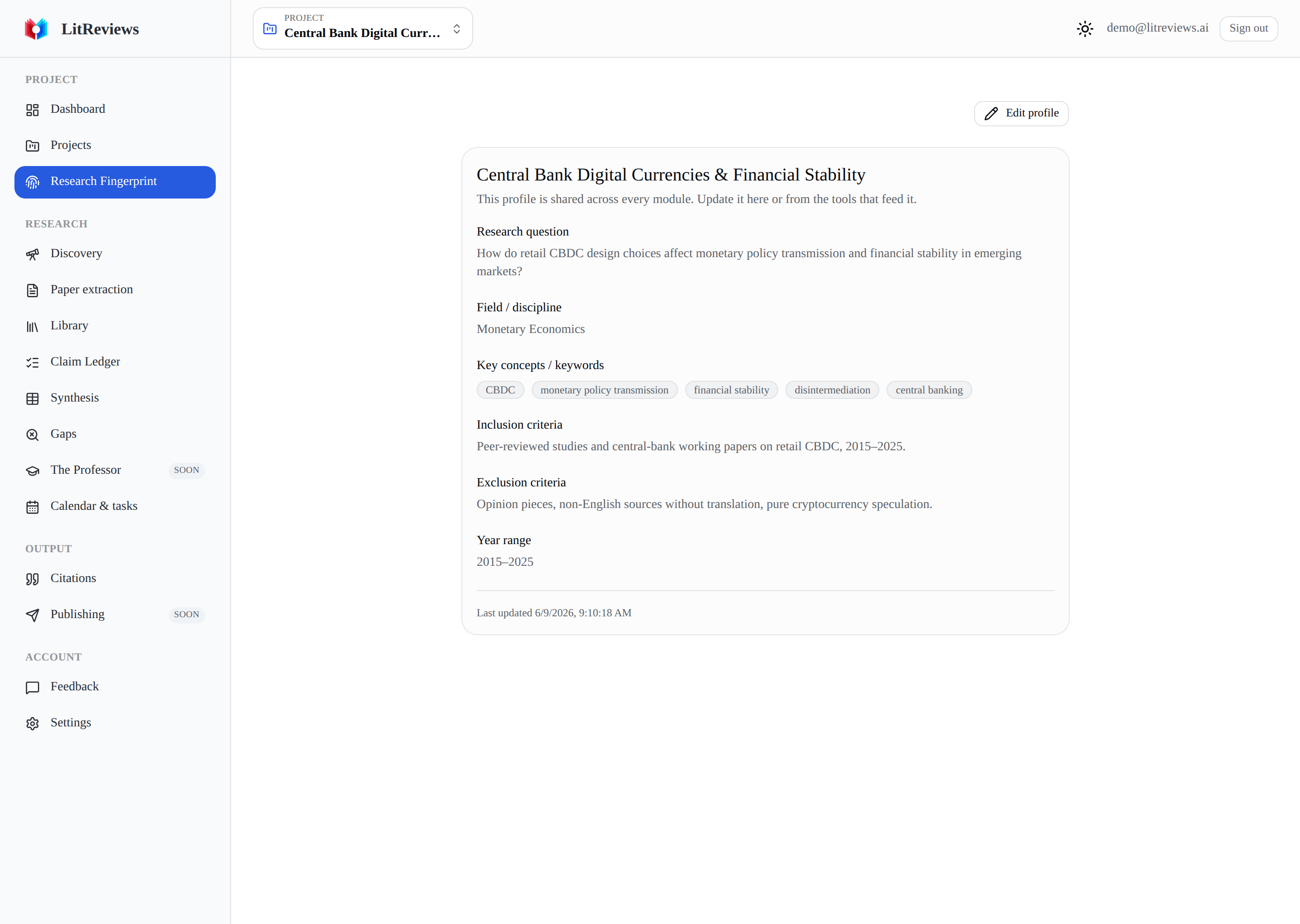
Define your Research Fingerprint
Set your research question, field, keywords, inclusion and exclusion criteria, and year range. Every output stays scoped to this project.
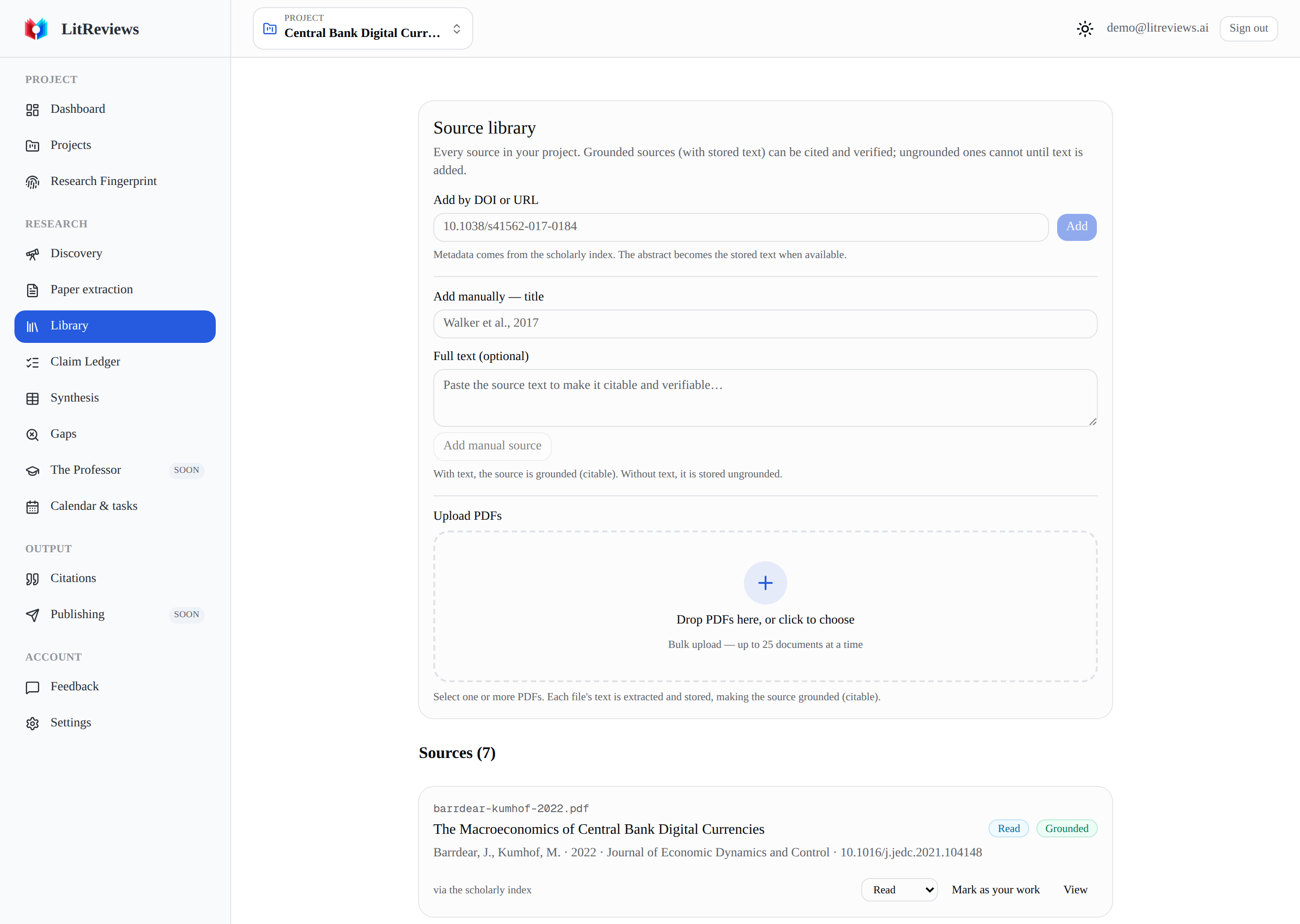
Add and ground your sources
Upload PDFs, add DOIs, or paste source text. Litreviews stores what can be verified and marks what is still ungrounded.
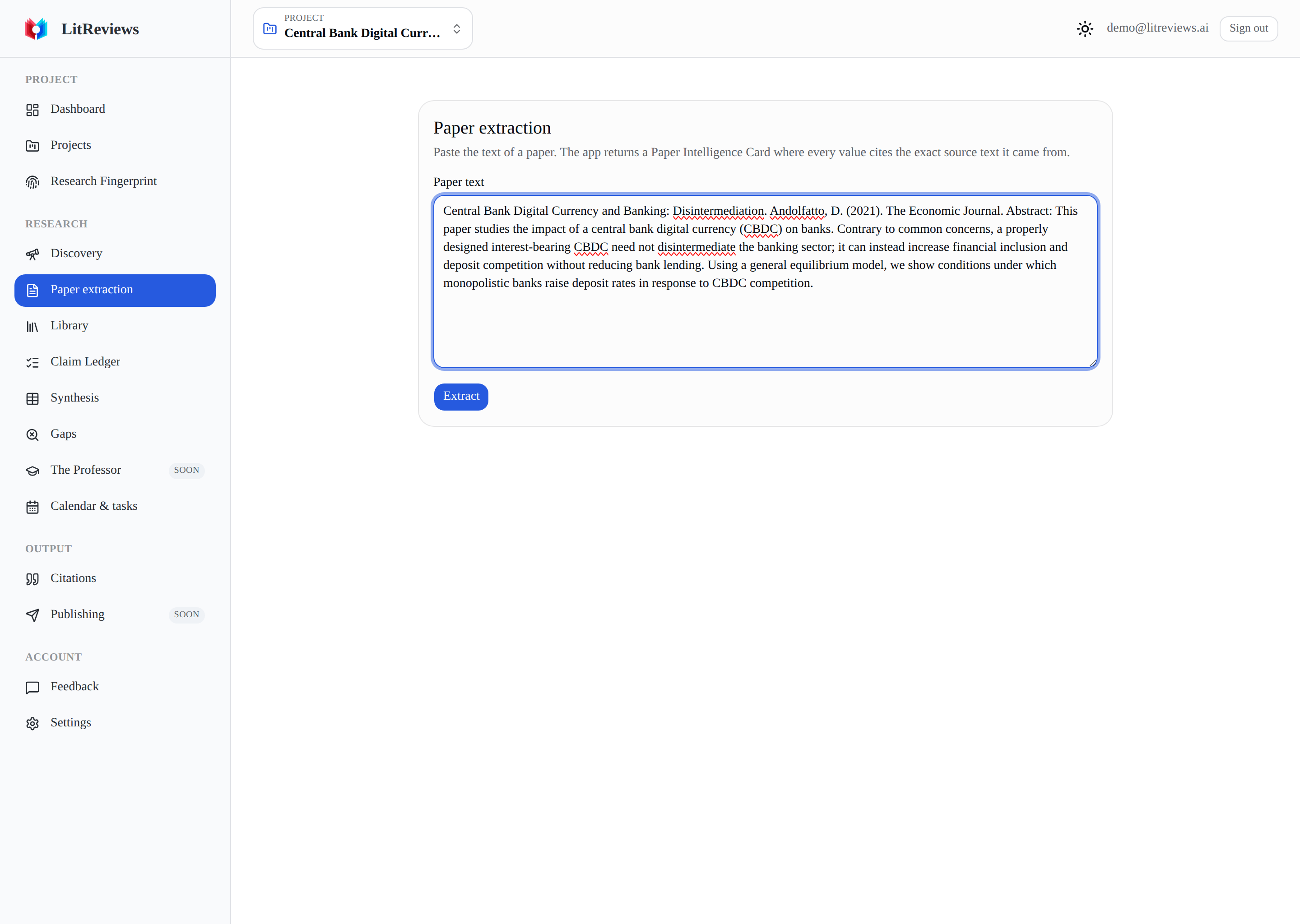
Extract paper intelligence
Turn each paper into a structured card grounded in the source text. If the source does not say it, Litreviews marks it as unavailable — never invented.
Bind claims to evidence
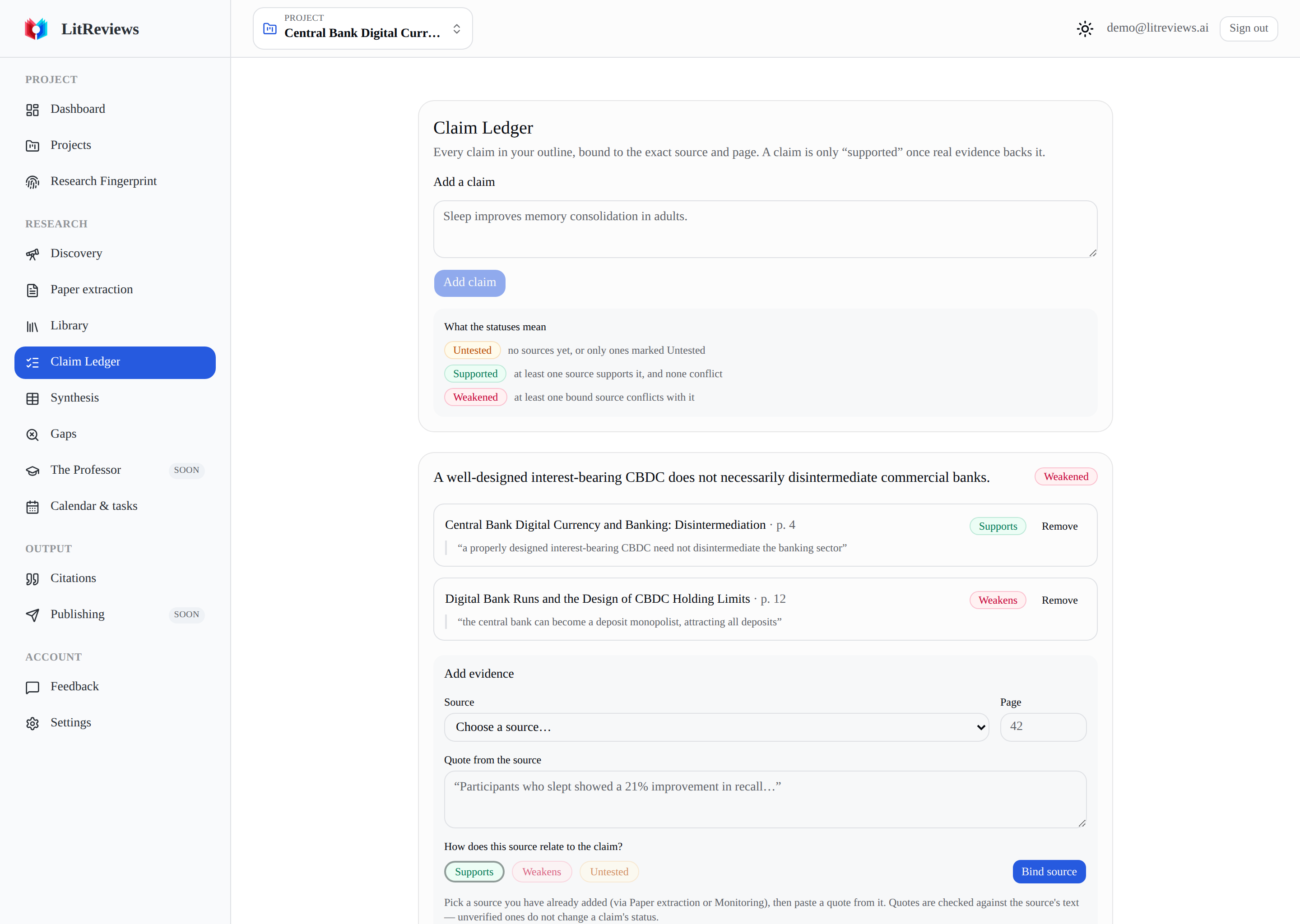
Build a Claim Ledger where each claim is Supported, Weakened, or Untested based on real source quotes and pages.
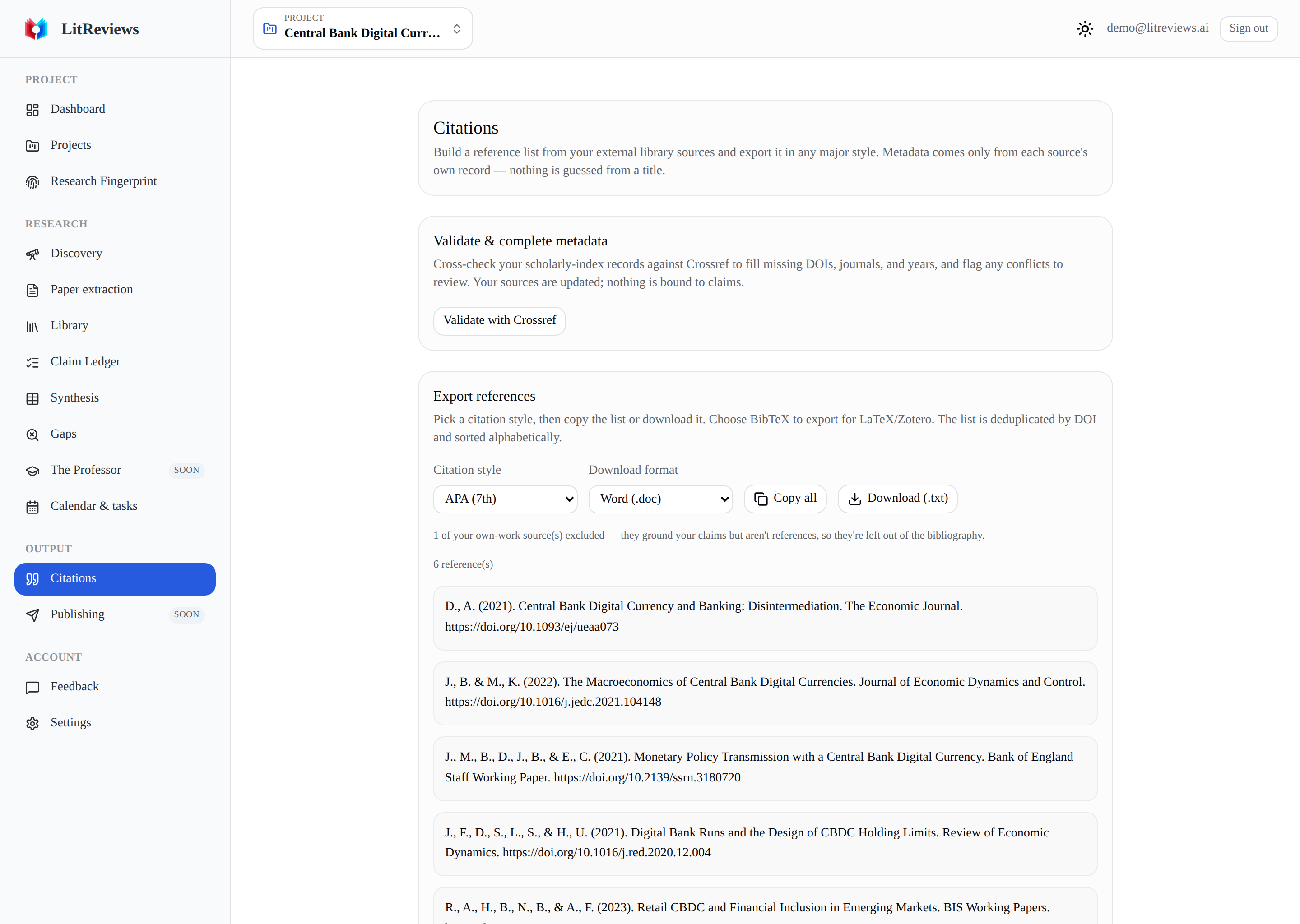
Export citations safely
Compile references only from sources actually used in your project, with duplicates removed and metadata checked.
Built for researchers who need proof, not prose.
Research Fingerprint
Your review starts with a clear scope: question, field, keywords, criteria, and date range. Keeps outputs relevant and prevents project contamination.
Source Library
Add papers by DOI, URL, manual entry, or PDF upload. Sources with stored text become grounded, citable, and verifiable.
Claim Ledger
Track the claims your review makes. Bind each one to exact evidence, page numbers, and source quotes.
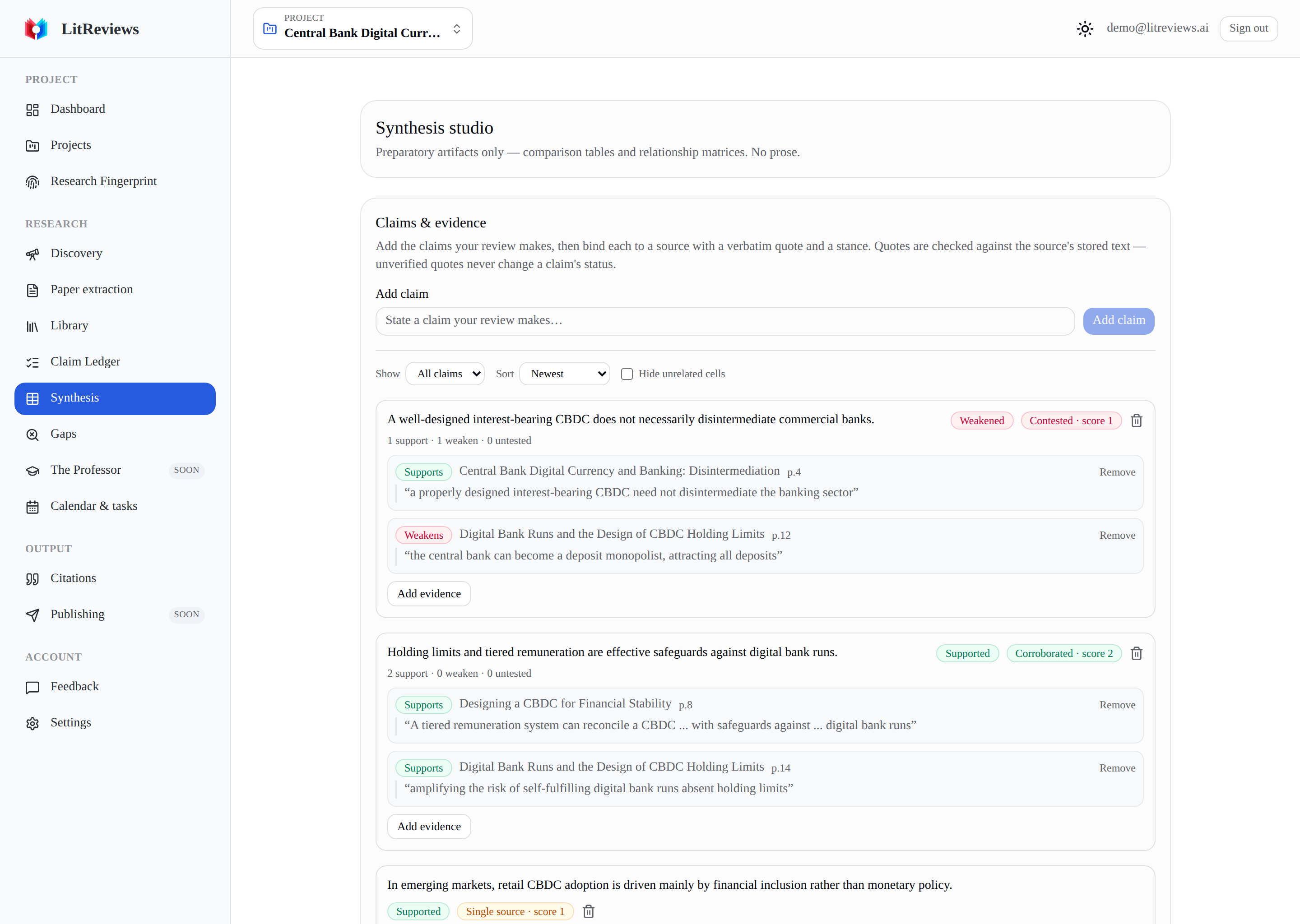
Synthesis Studio
Prepare comparison tables and relationship matrices from claims and evidence. No generated essay text.
Coverage Gaps
Surface thin areas in your evidence: contradictions, single-source claims, missing concepts, and unsupported areas.
Citations
Export clean references from sources you actually used. Nothing guessed from a title. Nothing invented.
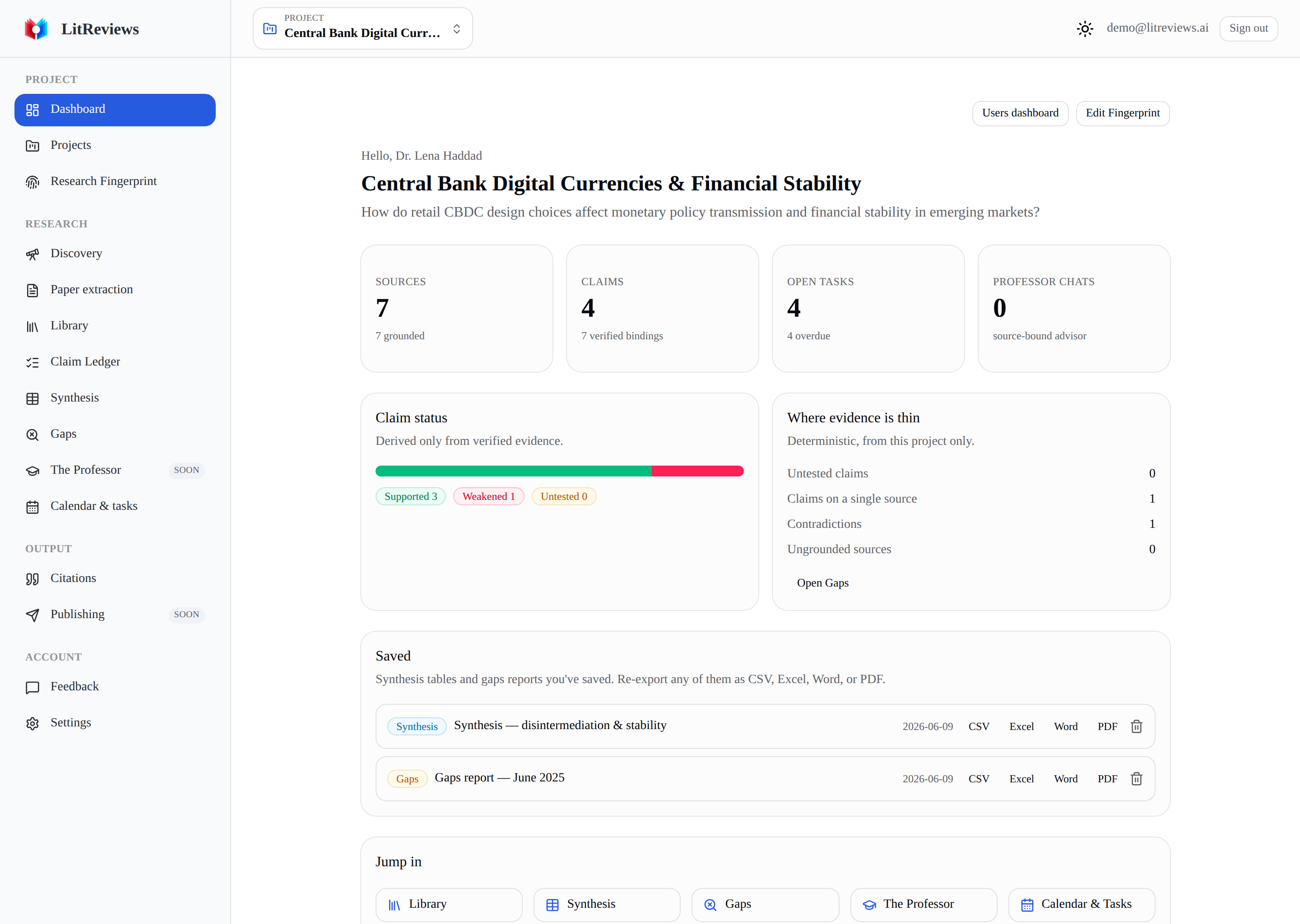
Your project dashboard — sources, claim status, and where the evidence is thin, all scoped to one review.
A claim is only “supported” once real evidence backs it.
The Claim Ledger is the center of Litreviews. Every claim in your review carries a status based on the evidence you bind to it.
Supported
At least one verified source supports the claim, with no verified conflict.
Weakened
At least one bound source conflicts with the claim.
Untested
No verified supporting evidence has been bound yet.
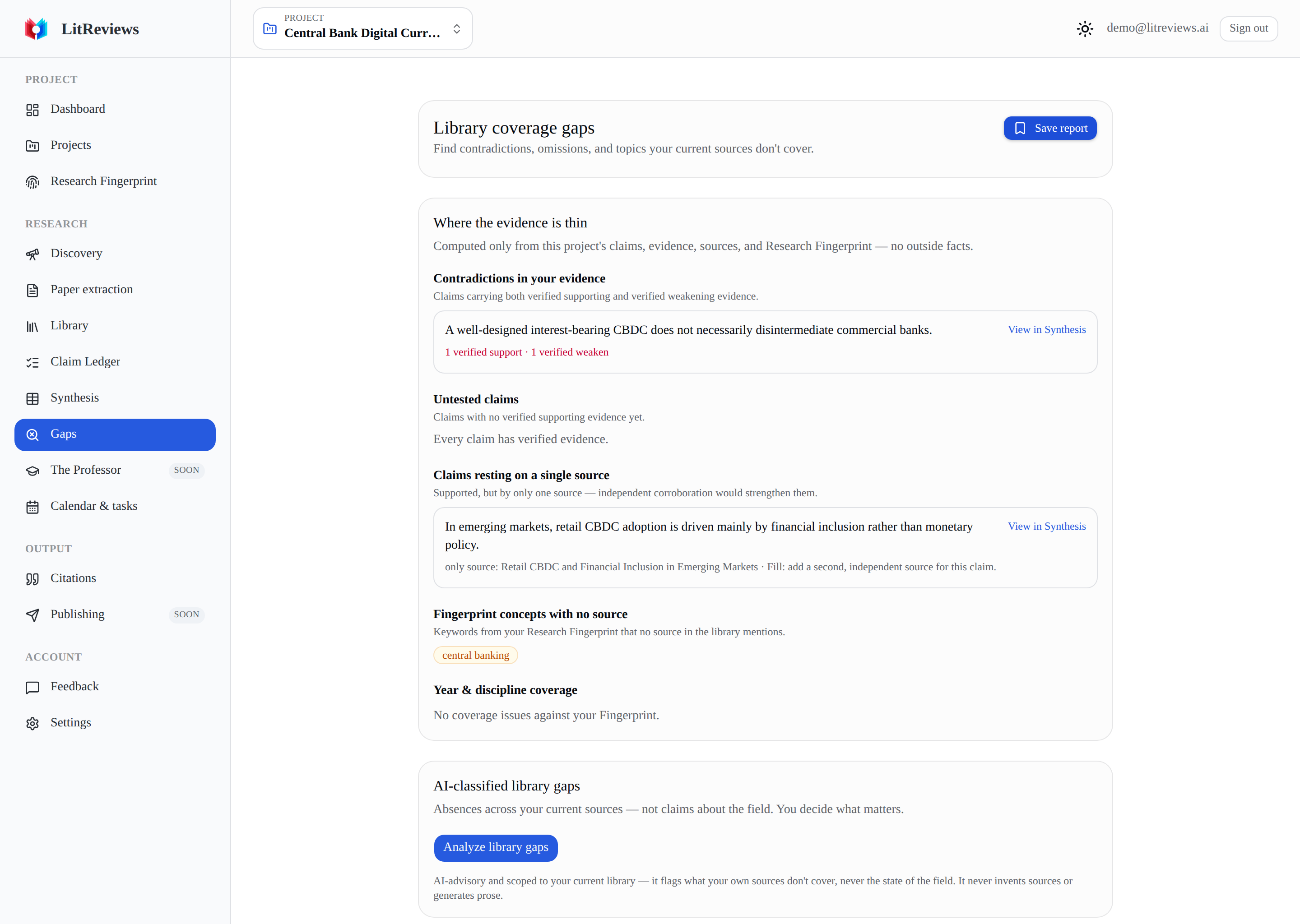
Know where your review is thin before your supervisor does.
Litreviews helps you find evidence weaknesses inside your own library — claims resting on one source, contradictions between sources, missing fingerprint concepts, and areas that need stronger support.
Gaps are computed from your project only — not invented from outside facts.
Contradictions
Claims with both supporting and weakening evidence.
Single-source claims
Claims that need independent corroboration.
Untested claims
Claims not yet backed by verified evidence.
Missing concepts
Fingerprint keywords not represented in your library.
Prepare the evidence. You write the review.
Litreviews does not draft your paper. It creates preparatory research artifacts: claim-evidence tables, synthesis matrices, gap reports, and citation lists.
Litreviews is not an essay generator. It supports your thinking, but the review remains yours.
Made for serious academic work.
Master’s students
For students drowning in papers and deadlines. Extract structured cards, track claims, and avoid citation mistakes.
PhD candidates
For researchers who need to prove rigor. Show which claims are supported, weakened, contested, or still thin.
Faculty & independent researchers
For researchers who want AI speed without losing evidence control, project isolation, and citation discipline.
Start free. Upgrade when your review gets serious.
The core workflow is free forever — no card, no trial clock. Pro unlocks the advanced research tools and a high monthly AI allowance.
Free
The full core workflow — no card required.
- 2 projects
- Research Fingerprint, Claim Ledger, Citations & Monitoring
- Metered AI — paper extraction & AI suggestions each month
- No credit card required
Pro
For students, researchers & professionals — master's, PhD, and beyond.
- Everything in Free
- 5 projects — add more in packs of 5
- High monthly AI allowance
- The Professor — source-bound research advisor
- Question builder, Methods helper & Research plan
- Outline, Writing support & Reading planner
- Evidence map & Export pack
- Automatic full-text fetch (Pro)
Institution
Department & multi-seat licensing.
- Everything in Pro
- Department & multi-seat licensing
- Centralized billing
- Onboarding support
The Professor
A source-bound research advisor that pressure-tests how defensible your review is. It reasons only over your project’s sources, claims, and Research Fingerprint — flagging weak or over-reaching claims and gaps, across up to five chats per project.
It never invents facts, and it never drafts your paper.
Included in Pro, alongside Outline, Writing support, Evidence map, and more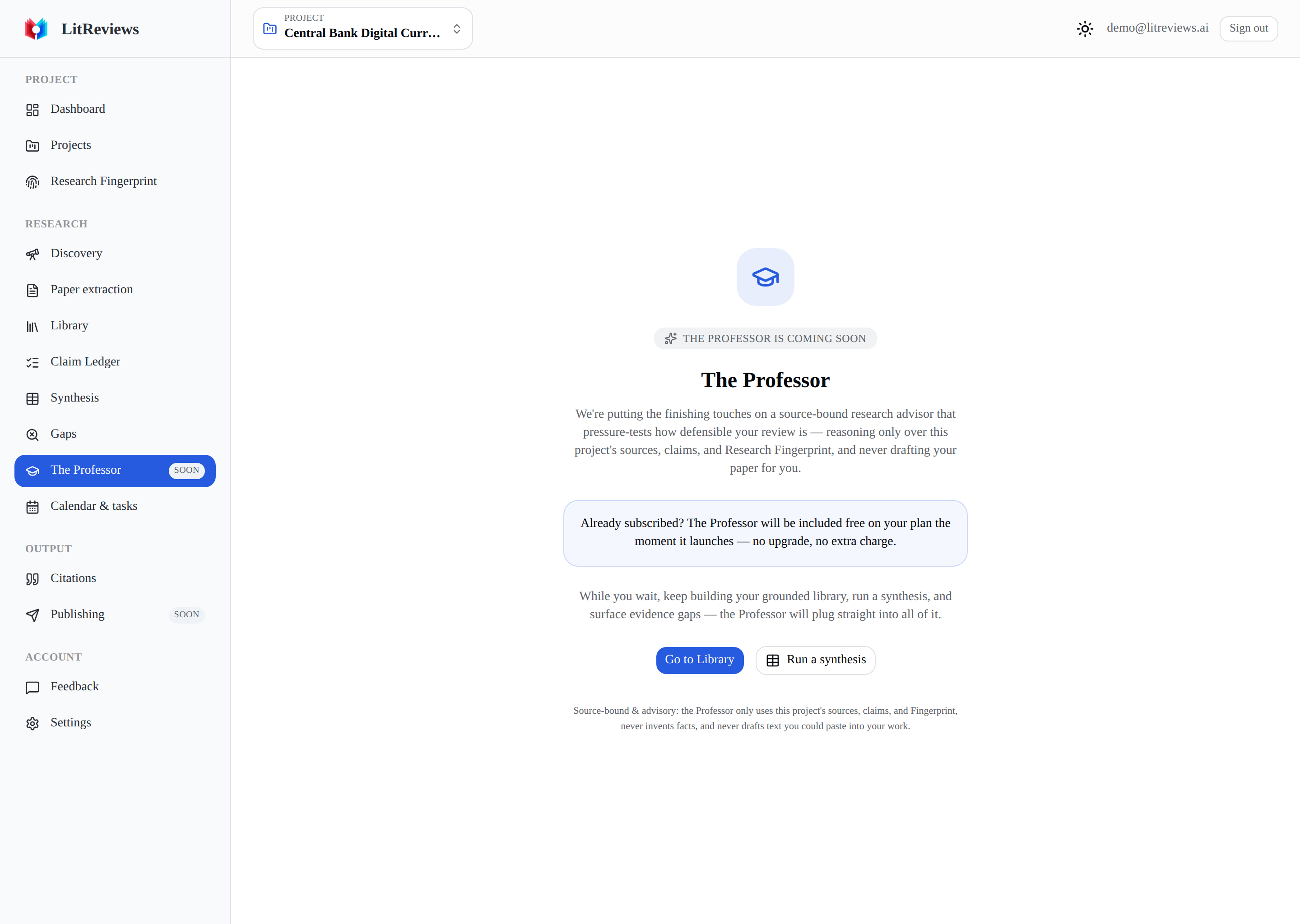
From a pile of papers to a defensible structure.
Pro takes your grounded library further: map where the evidence clusters, arrange claims into a structural outline, and export a complete evidence pack — all built from your own data, never prose.
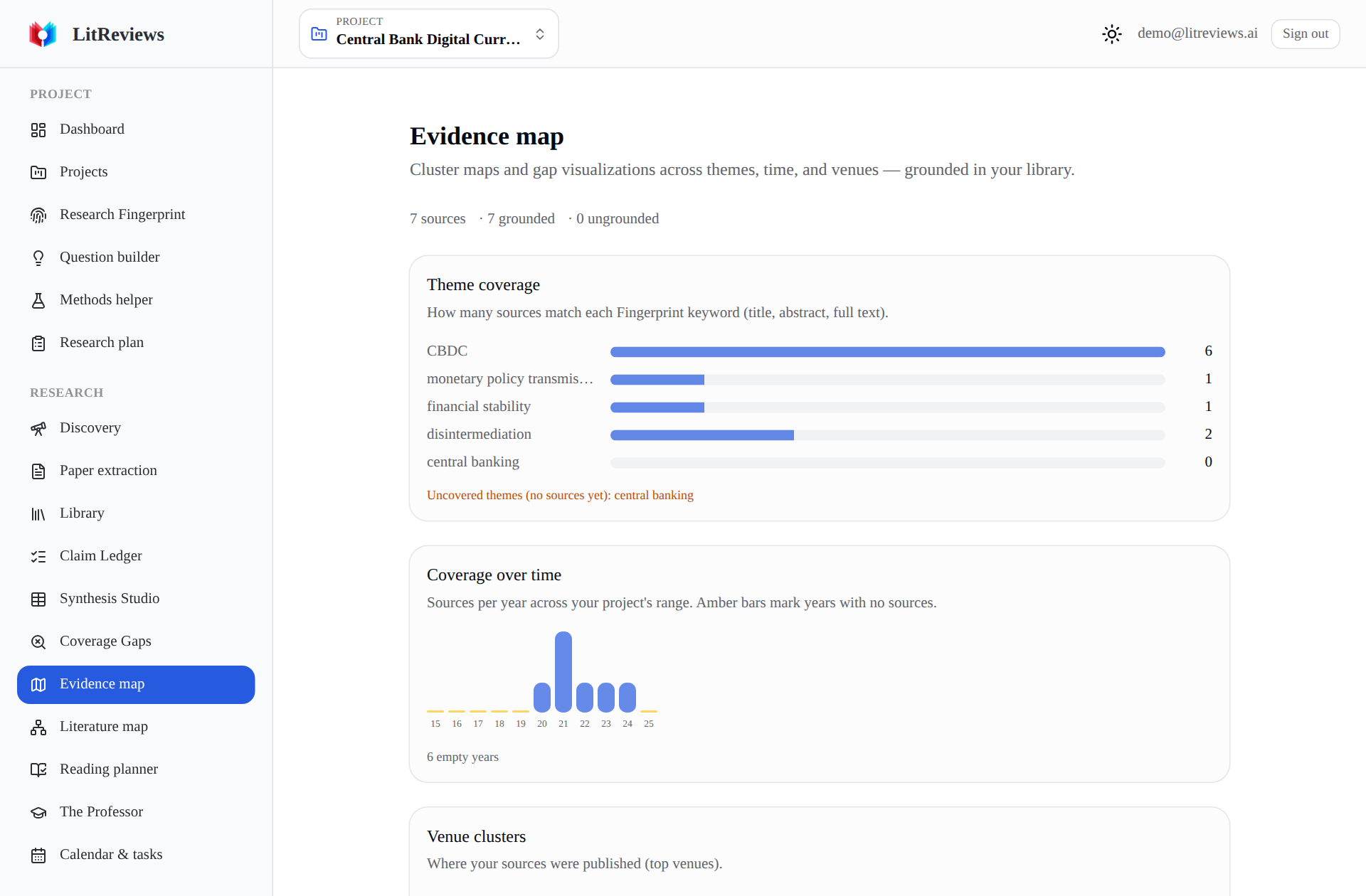
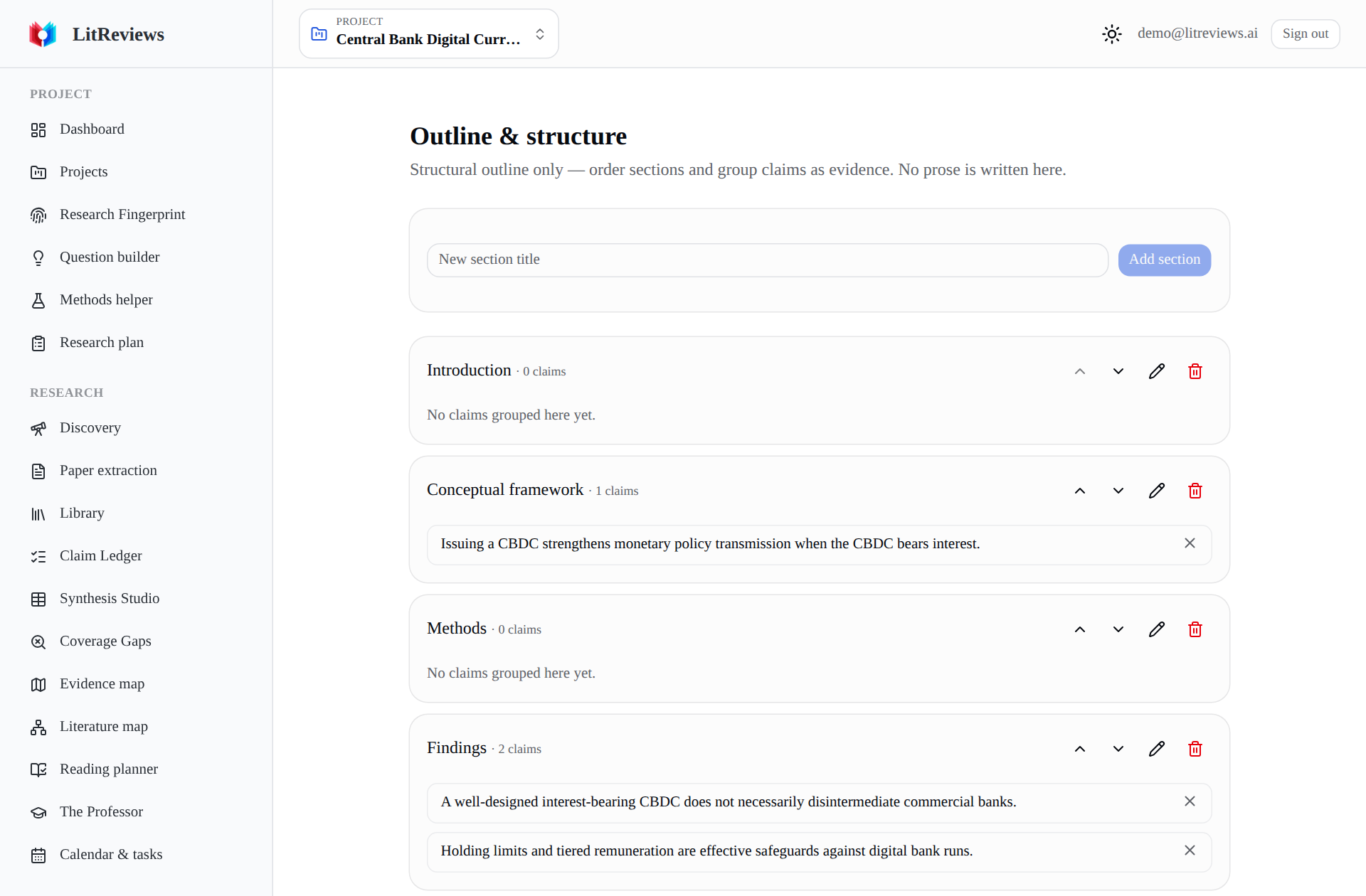
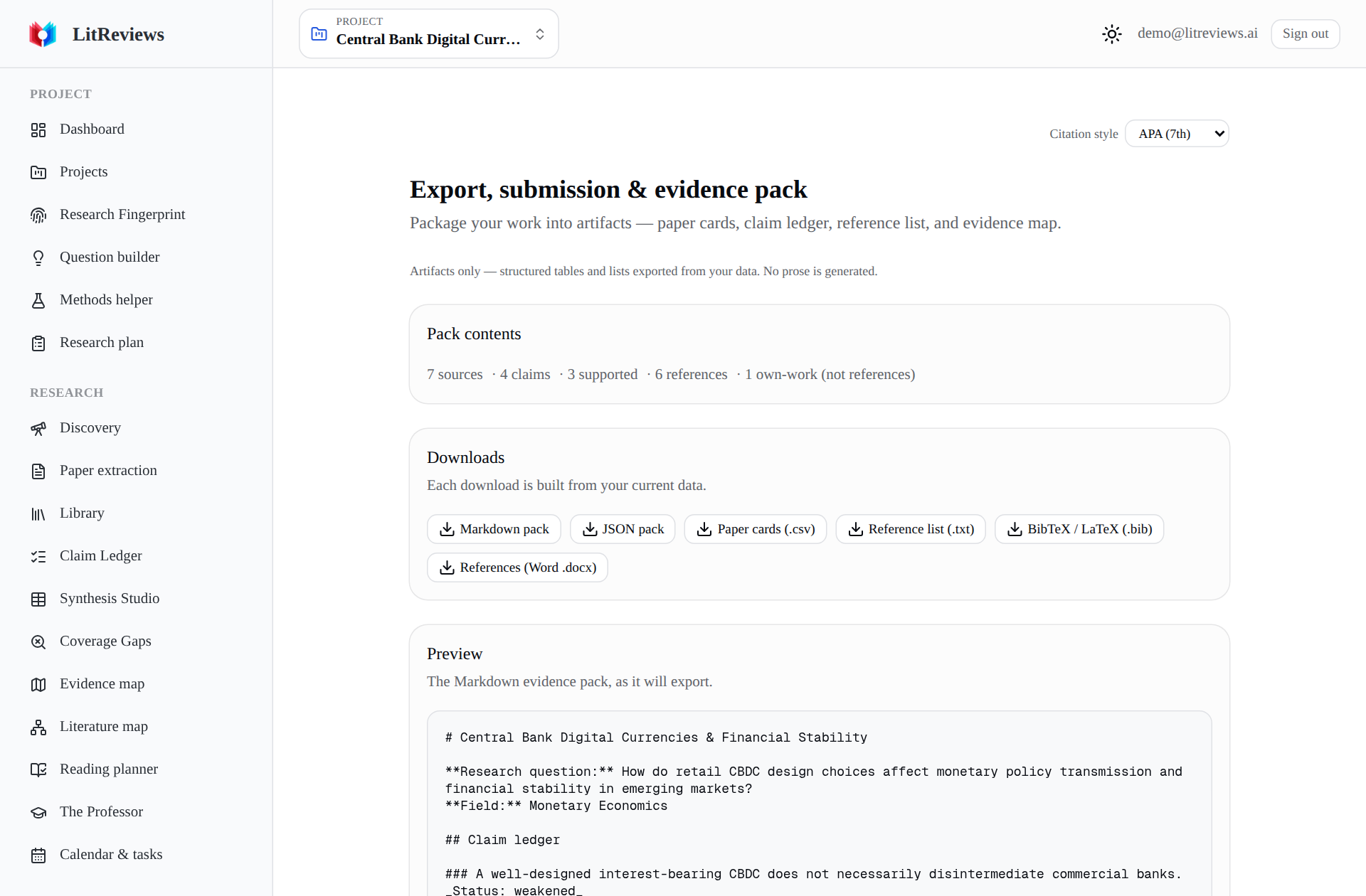
Plus the Question builder, Methods helper, Research plan, Writing support, and Reading planner — all Pro, all source-bound.
Build a literature review you can defend.
Every claim. Every source. Every citation. Connected.