Everything you need for a grounded review

LitReviews analyzes, structures, and verifies. You stay the author and the decision-maker — the AI is always source-bound.

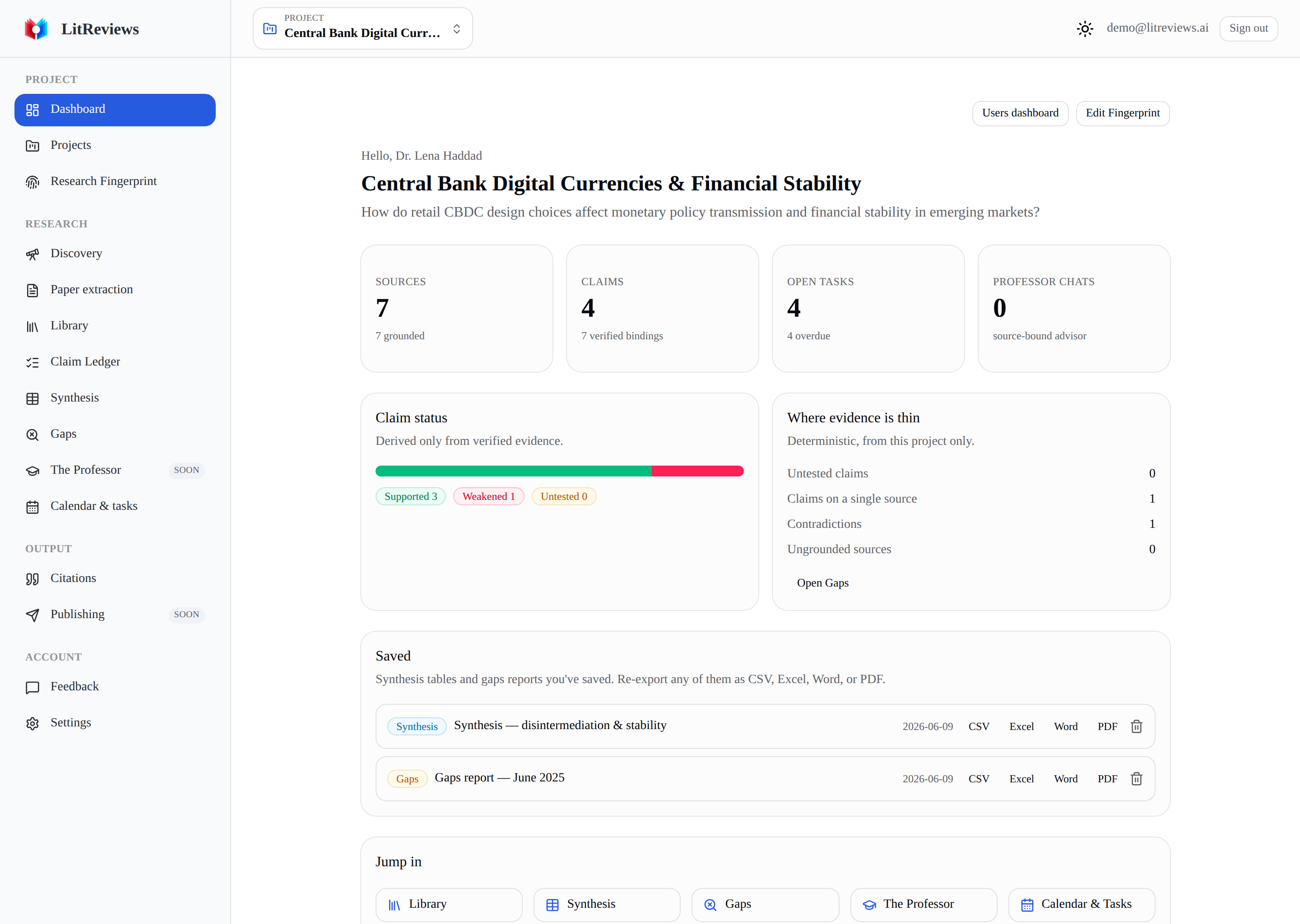
LitReviews dashboard

Discovery

Relevance-rankedFoundational vs. frontierCitation walking

Search a scholarly index for the work that matters to your project, ranked by relevance to your Research Fingerprint rather than by date, and split into foundational and frontier literature. Expand any result to walk its citation network — backward to the papers it builds on, forward to the papers that cite it — so you stop missing the source everyone else cites. Nothing is crawled from the open web; metadata is pulled clean from the index, never invented.

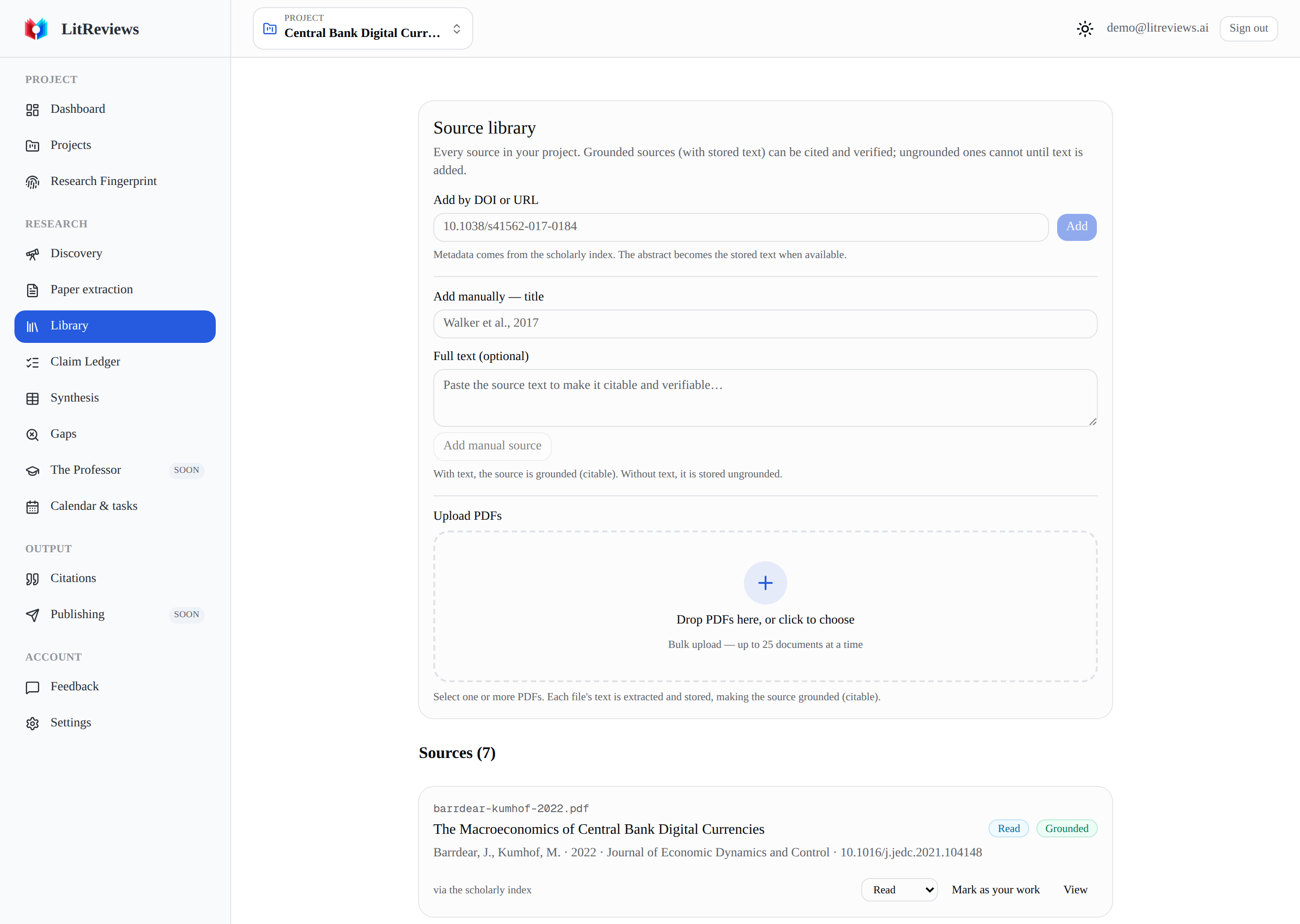
Source Library

DOI / URLPDF upload ×25AI metadata

Manage every source for the active project — title, authors, year, venue, DOI, URL, abstract, and full text. Add a source by DOI/URL from the scholarly index, by pasting paper text (which grounds it for quote verification), or by uploading up to 25 PDFs per batch. For uploads, the AI reads the document's own text to fill in the real title, authors, and year — so the library never just shows a filename — while the original file is kept for download. A source can only ever enter the project it belongs to.

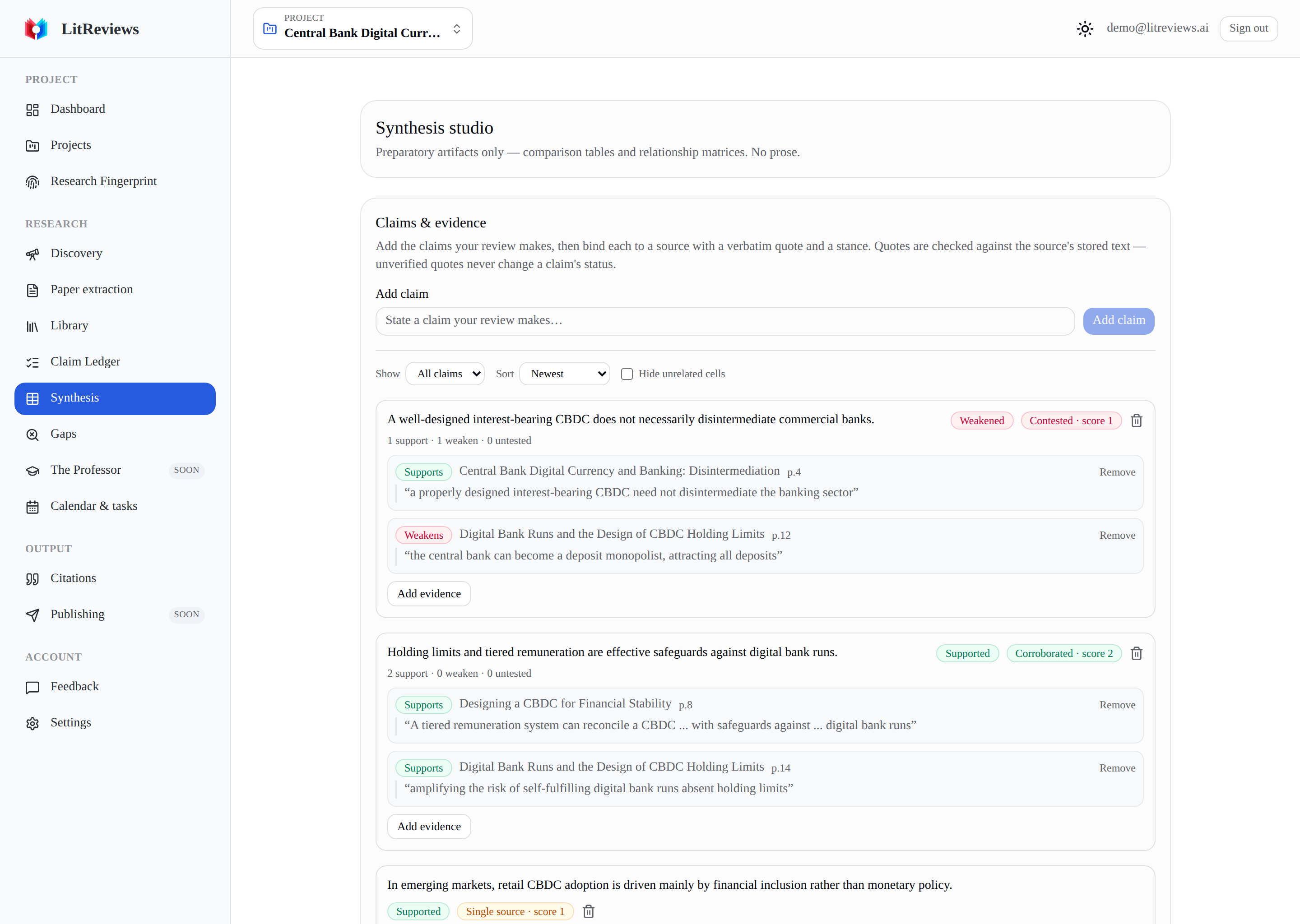
Synthesis Studio

Claim × source matrixDefensibilityQuote bank

Add the claims your review makes and bind each to a source with a verbatim quote, page, and stance (supports / weakens / untested). Quotes are verified against the stored source text. You get a claim × source matrix, a defensibility score and consensus/contention tally per claim, a source coverage heatmap, a chronological evidence view, a quote bank, and an AI comparison table of short method/dataset/population/finding tags. Save and export any table to CSV, Excel, Word, or PDF. Output is structured tables only — never paragraphs you could paste into a paper.

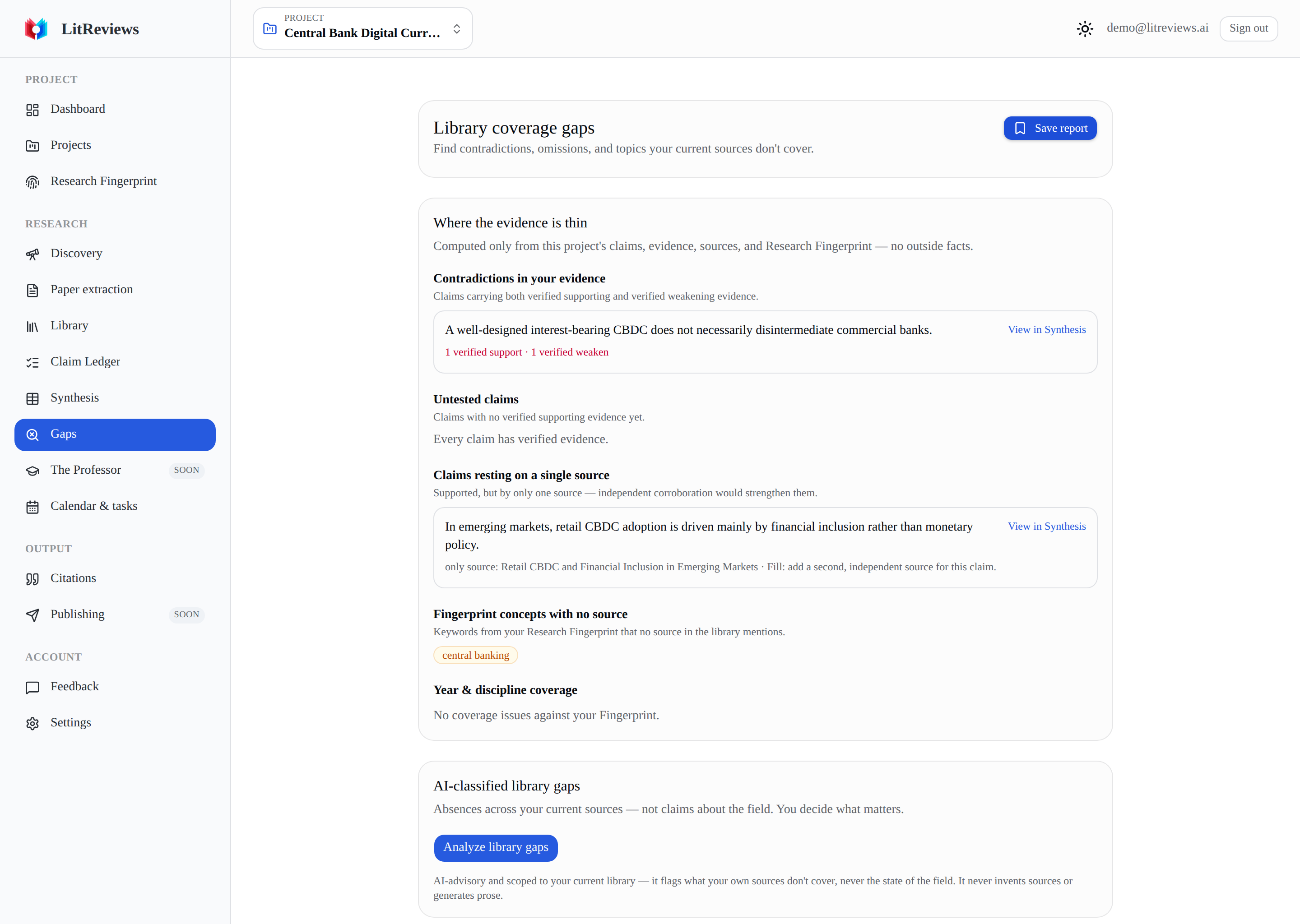
Coverage Gaps

Untested claimsContradictionsUncovered concepts

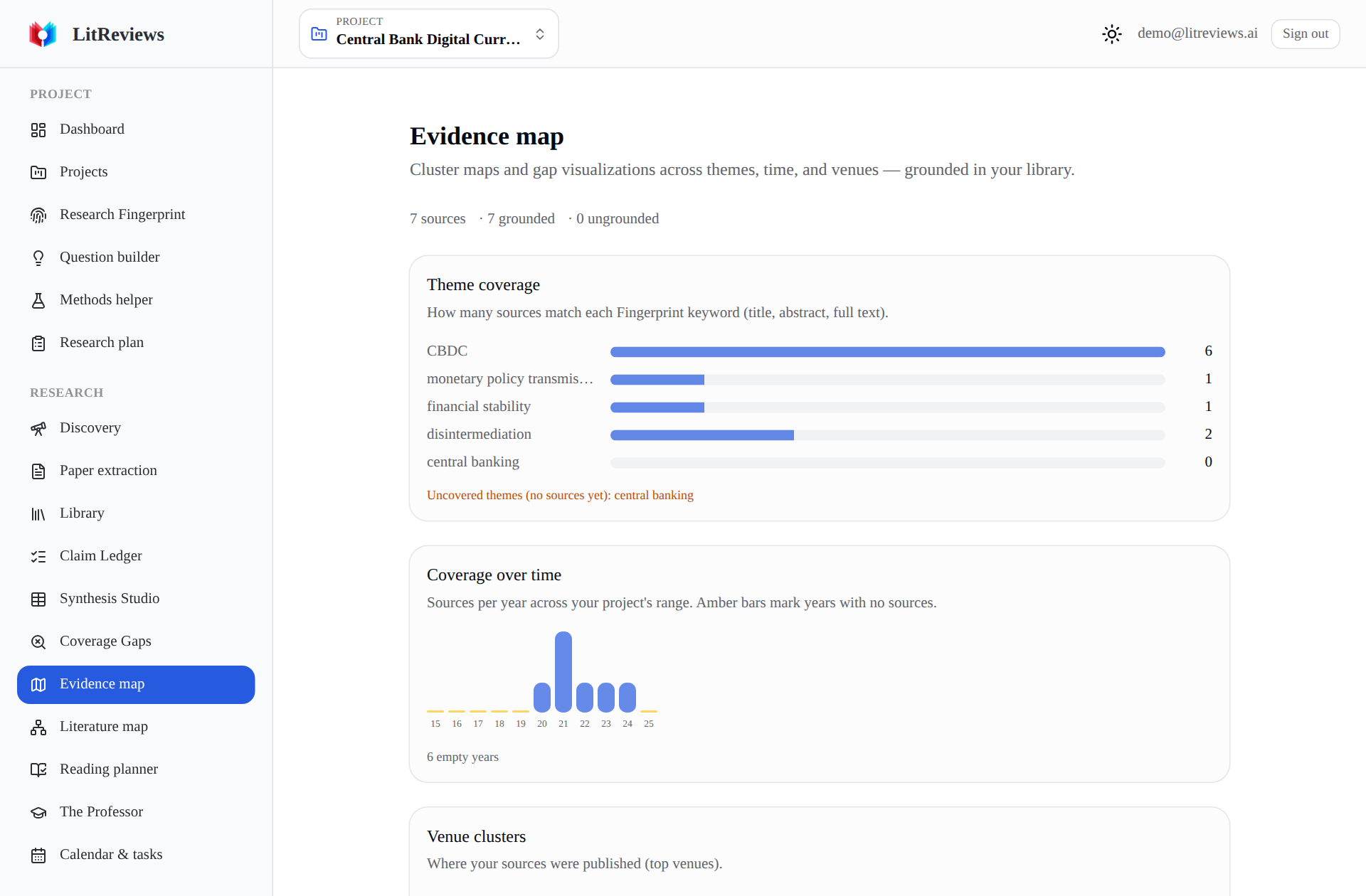
See where the evidence is thin, computed only from this project: untested claims, claims resting on a single source, contradictions, Research Fingerprint concepts no source mentions, and year-range coverage. Each gap is stated factually with a suggested kind of source to fill it — a map of where your evidence runs out and where your contribution might begin. An optional AI pass classifies library gaps without fabricating sources.

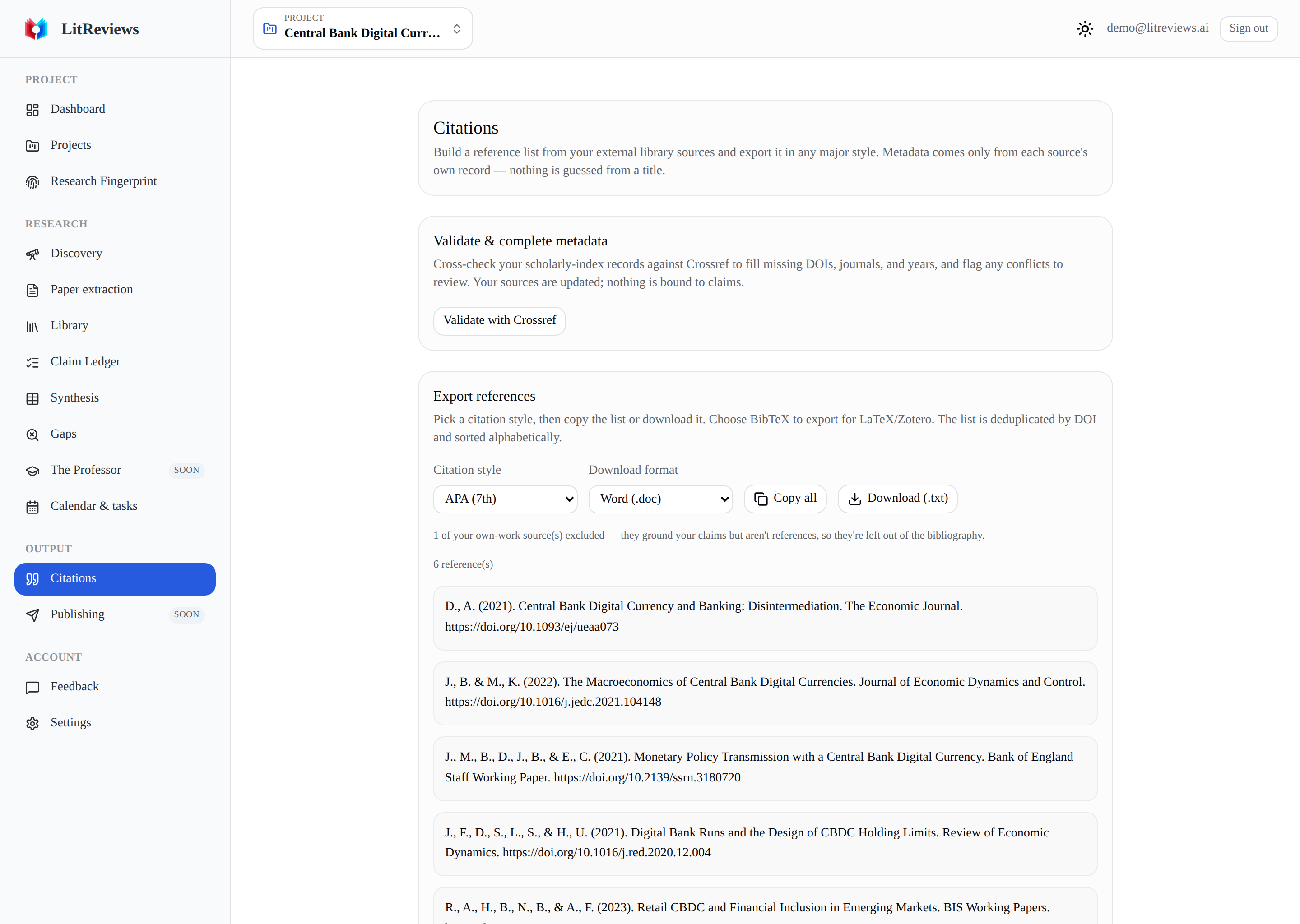
Citations

APA · MLA · Chicago · HarvardIndex-validatedWord · BibTeX · CSV

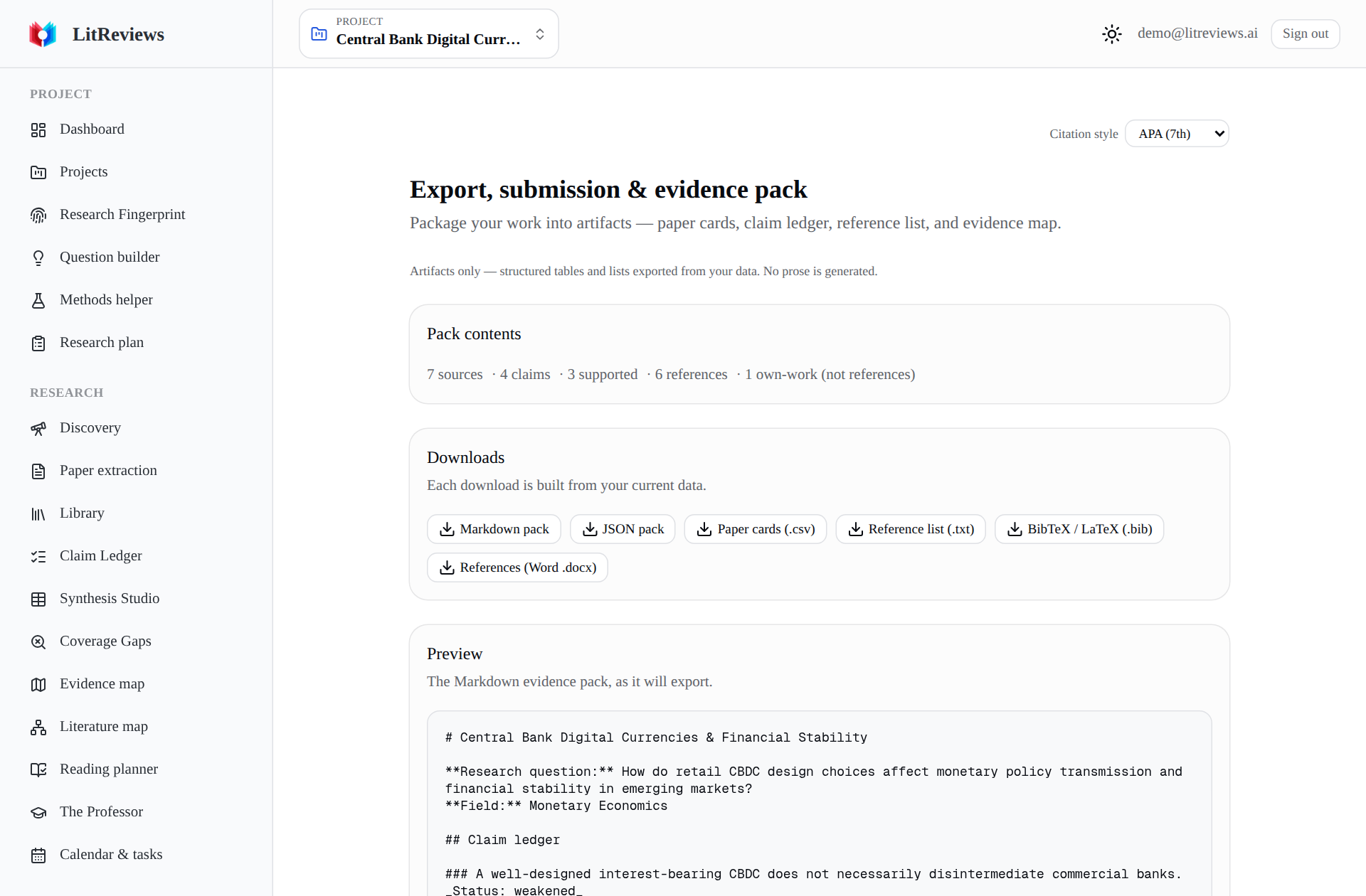
Compile a reference list from your external sources in any major style — APA, MLA, Chicago, Harvard, IEEE and more — built only from each source's own metadata, never guessed from a title. Cross-check and gap-fill against a canonical index to complete DOIs, journals, and years, and flag any conflicts to review. Export the list to Word, Excel, CSV, Markdown, JSON, BibTeX, or plain text.

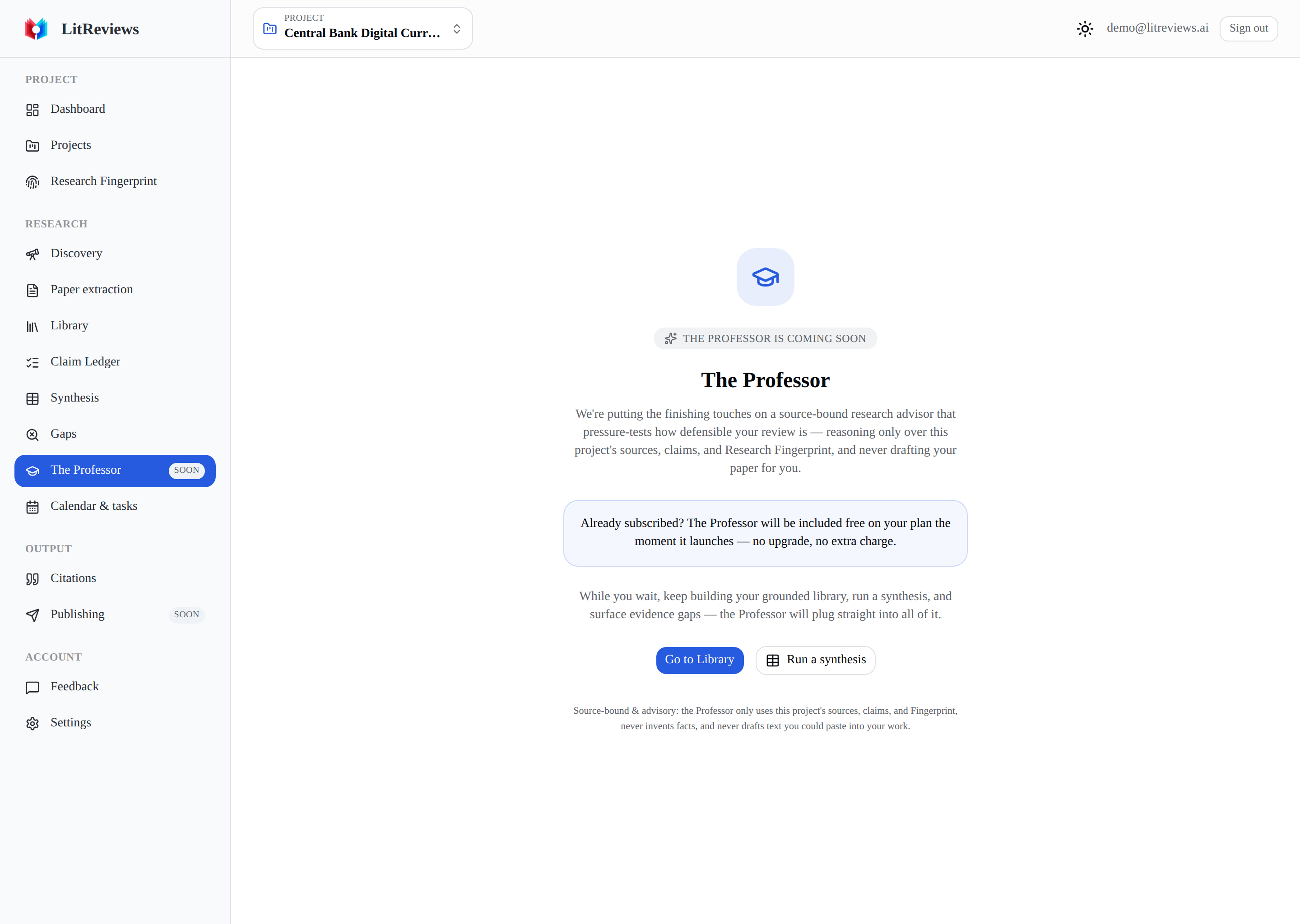
The Professor — coming soon

Source-boundSocraticFree for subscribers

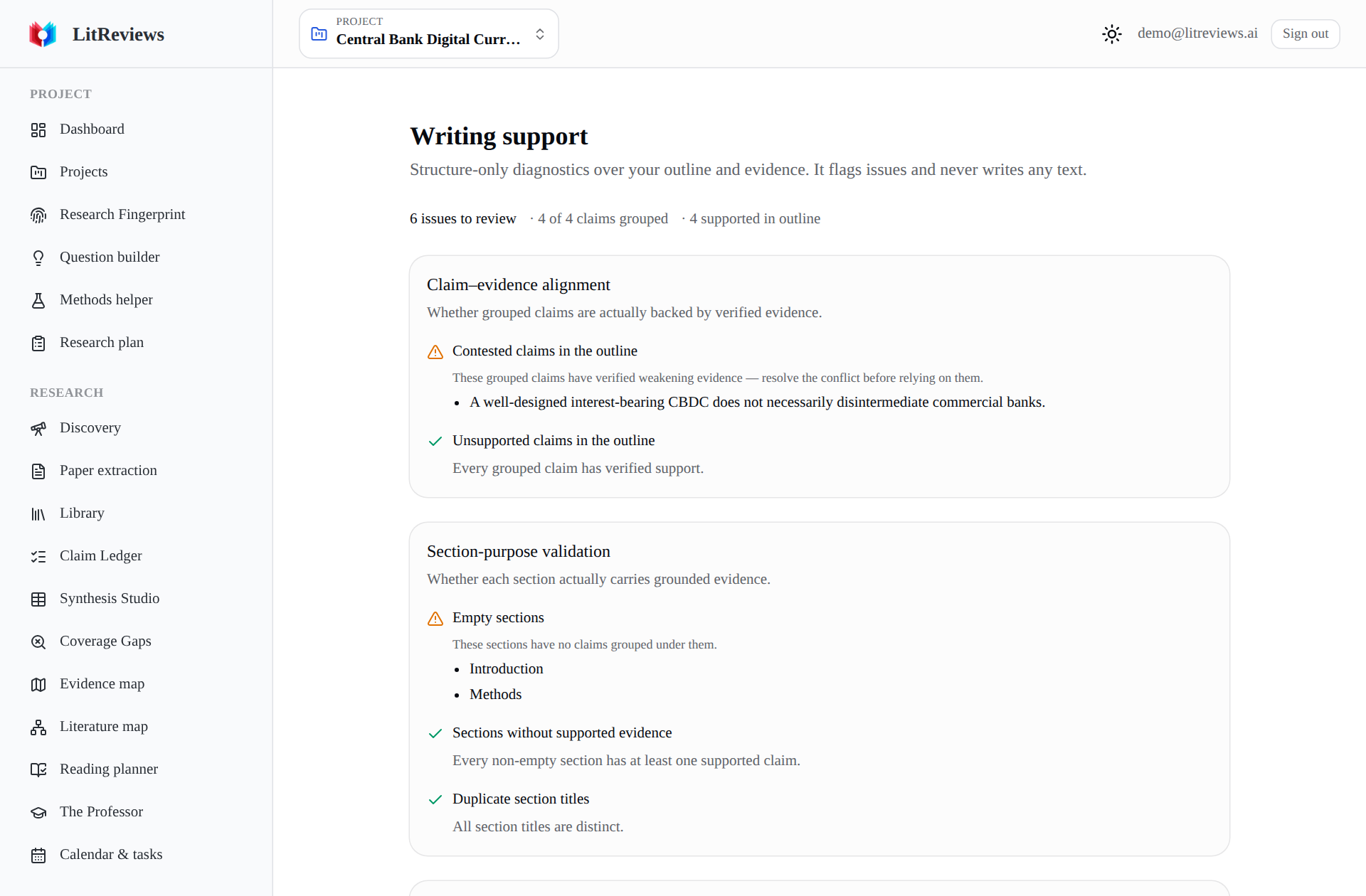
A source-bound, Socratic research advisor that pressure-tests how defensible your review is. It references specific claims and sources in your project, flags weak or over-reaching claims, and highlights gaps — but it introduces no outside facts and never drafts prose. Coming soon, and included free on your plan the moment it launches — no upgrade, no extra charge.

The Professor — coming soon

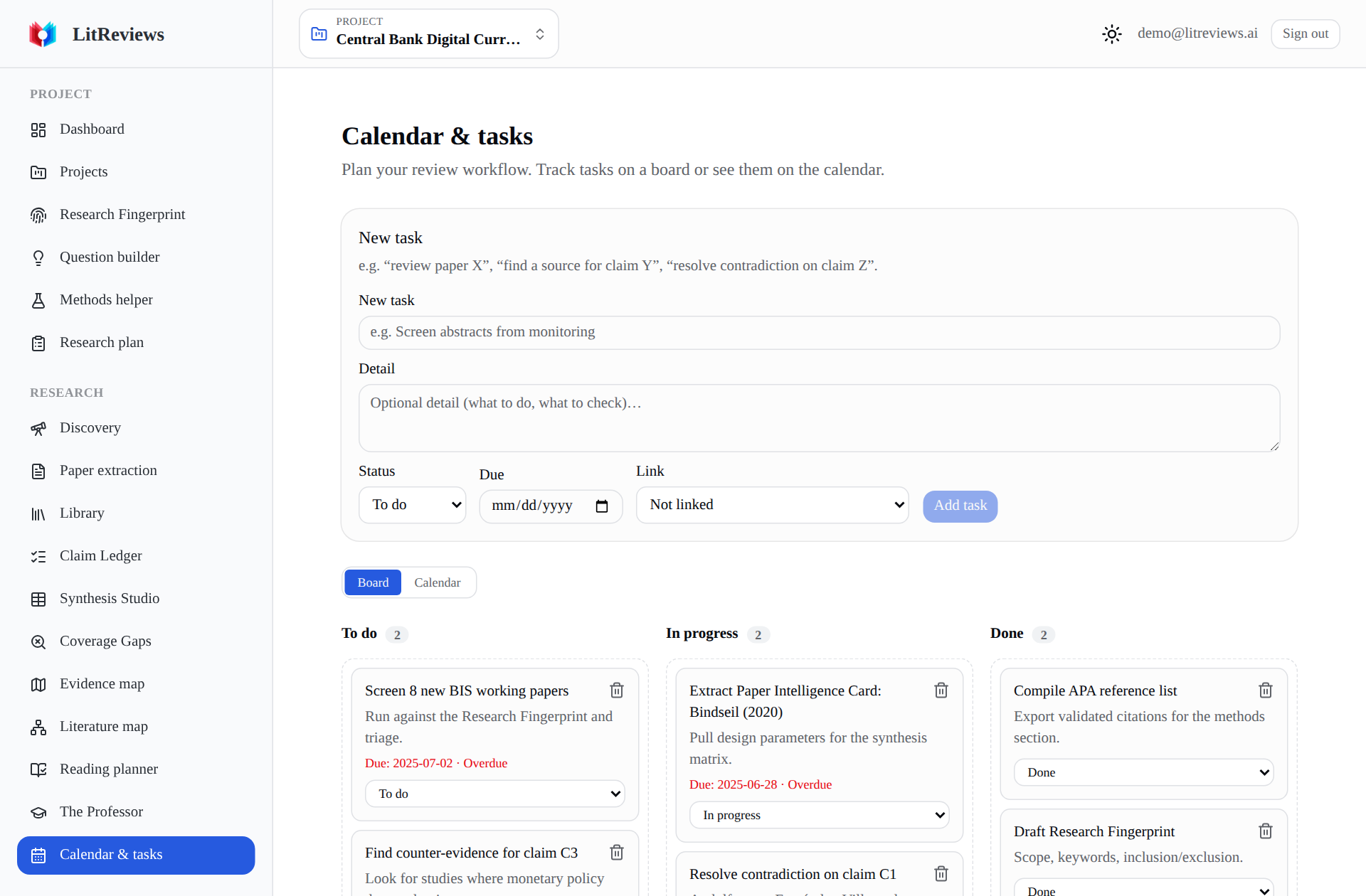
Calendar & Tasks

Linked to claimsDue datesBoard & calendar

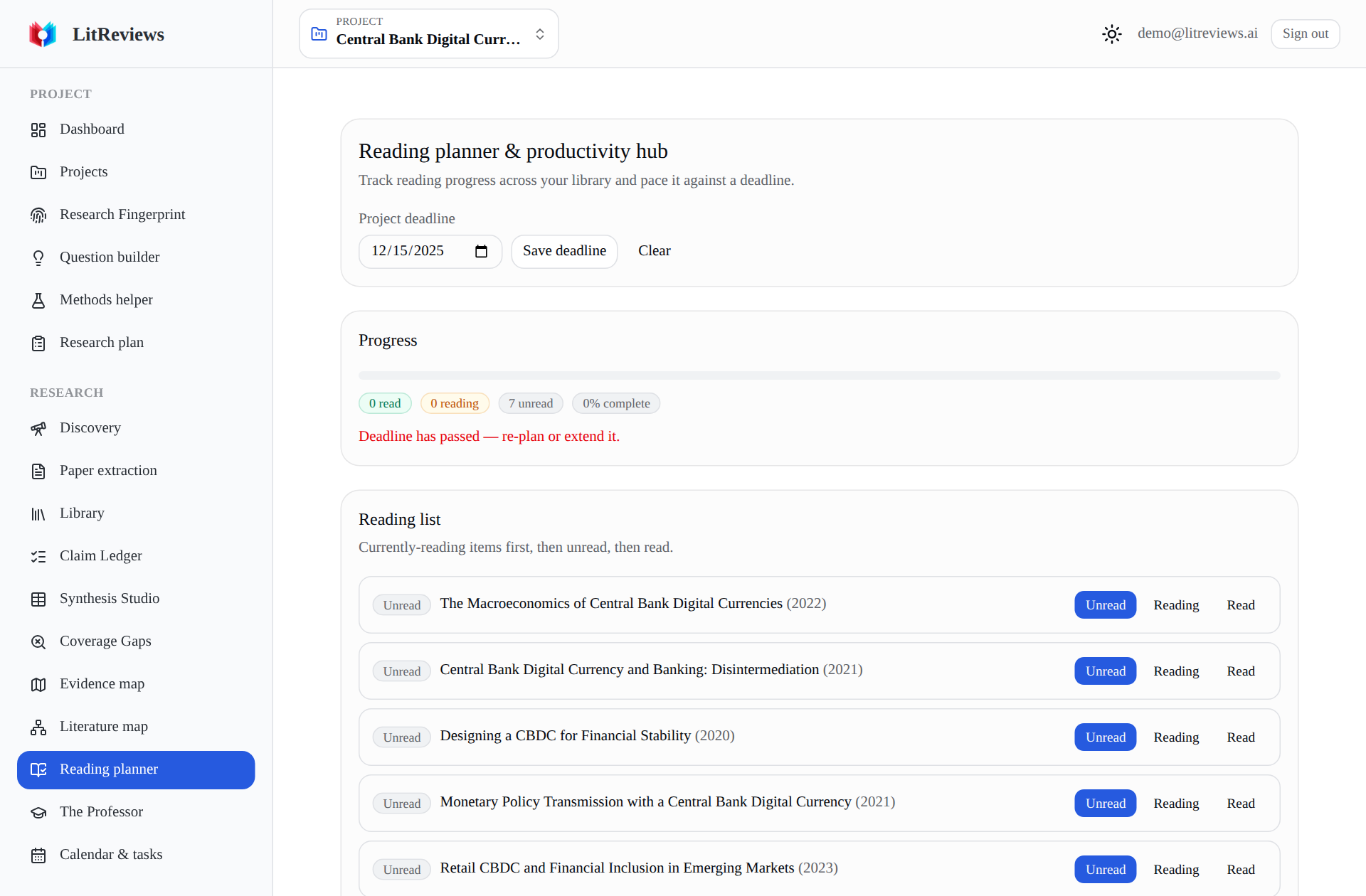
Lightweight, academic research-task tracking tied to the project — e.g. “review paper X”, “find a source for claim Y”, “resolve contradiction on claim Z” — with optional links to a specific claim or source and due dates on a simple board and month calendar.